Key takeaways
- Social media customer engagement is every interaction between a brand and its customers on social platforms, and it directly impacts retention, loyalty, and revenue.
- Enterprise teams need centralized systems, standardized workflows, and AI-powered tools to manage engagement consistently across regions and channels.According to Forrester, 83% of B2C marketing executives are already working to consolidate their social media tools into one place.
- Measuring engagement value (not just volume) helps prove business impact and improve customer experience over time.
- A documented customer engagement strategy with clear roles, platform-specific tactics, and connected analytics turns reactive replies into a strategic advantage.
What is social media customer engagement, and why does it matter?
Social media customer engagement is every reply, comment, message, and interaction that a brand has with its customers on social media platforms.
It’s a core part of modern social media marketing, because it offers customers a direct line to your brand, and gives you a way to show them who you are.
For enterprise brands, this engagement matters because it’s often the first real conversation a customer has with you. When people get fast, friendly responses, they feel seen. When they don’t, they move on.
Strong engagement helps big companies stay connected to customers, build trust, and keep people coming back long after the first interaction. It also strengthens your social media presence, showing customers you’re available and paying attention.
Bonus: Get our free, fully customizable Customer Experience Strategy Template that will help you understand your customers and reach your business goals.
How engagement differs from customer awareness and customer service
Customer engagement isn’t the same as customer awareness or customer service, even though all three happen on social media. Here’s how they compare.
| Type | Focus | Goal | Example interaction |
|---|---|---|---|
| Awareness | Being seen | Help people recognize your brand | A promoted post or brand story that reaches new audiences |
| Customer service | Fixing problems | Resolve questions and issues | Answering a complaint or troubleshooting an order |
| Engagement | Ongoing conversation | Build the relationship over time | Replying to comments, joining threads, and responding to DMs |
Engaging customers can include replies, comments, likes, shares, and conversation threads. But more importantly, it includes the quality of those interactions. Enterprise teams use social engagement to build trust, not just to close a ticket or answer a question.
Pro tip: Strong engagement also helps your content stay visible, since most platforms’ algorithm boosts accounts that respond quickly and consistently.
Why social engagement drives customer retention and brand equity
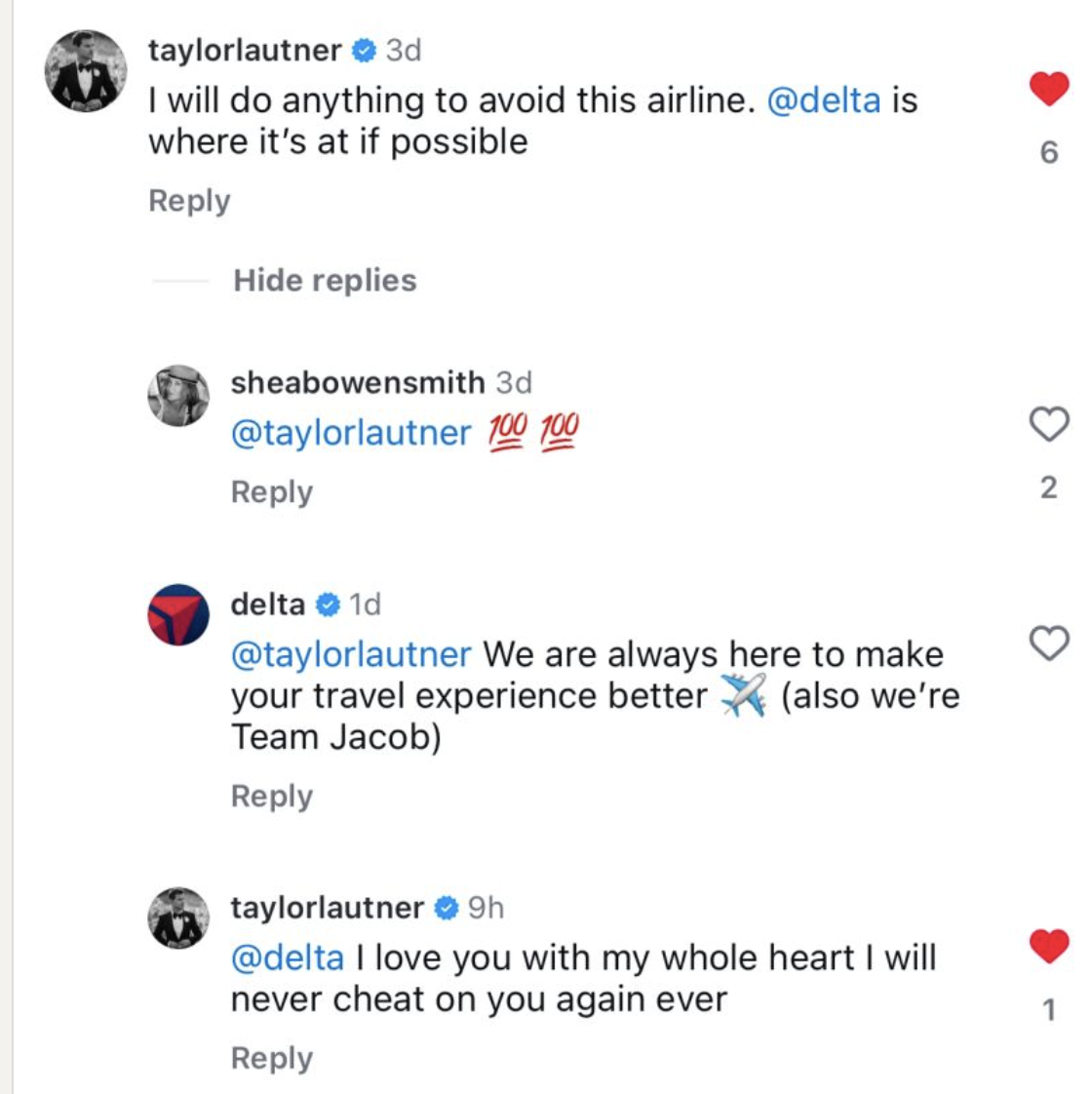
Social engagement builds retention because it makes customers feel valued. When people get fast, helpful replies, they are more likely to stay loyal to the brand. When they feel ignored, they are more likely to switch.
For enterprises, strong engagement and emotional connection also builds brand equity. It helps customers feel confident when you launch new products, because they already trust the people behind the brand.
These positive interactions also influence purchasing decisions, because customers tend to buy from brands that respond quickly and treat them well. That link between service and loyalty is why customer retention so often starts with a single reply.
These interactions become social proof that the brand listens, cares, and shows up when customers need help.
Source: LinkedIn
What role does social media play in customer engagement?
Social media plays a central role in customer engagement because it’s the one channel where brands and customers can talk in public, in real time, and at scale. Unlike email or phone support, social lets people interact with your brand the same way they interact with friends.
For enterprise brands, that changes the stakes. Every reply is visible, and every conversation shapes how others see you.
Social media supports customer engagement in a few key ways:
- Brand awareness: Consistent, responsive engagement keeps your brand top of mind and introduces you to new audiences through shares and comments.
- Customer experience: Fast, human replies make people feel supported, which shapes how they feel about your brand overall.
- Feedback and loyalty: Social is a live feedback loop. Customers tell you what’s working, what’s broken, and what they want next.
- Website traffic and conversions: Helpful conversations move people toward a purchase, a sign-up, or a renewal.
- Real-time crisis response: When something goes wrong, social lets you respond quickly and protect brand trust before an issue grows.
Because social sits at the intersection of marketing, service, and community, it’s often the first and most frequent touchpoint a customer has with an enterprise brand.
How can enterprises build a scalable social media engagement system?
Enterprises build scalable social media engagement by creating a clear customer engagement strategy with systems that help teams respond fast, stay consistent, and work from the same information.
At a high level, a scalable system comes down to five moves: centralize conversations in one inbox, standardize workflows and tone, build clear tags and routing rules, use automation to support human replies, and connect engagement data to analytics. A scalable B2B social media engagement system brings every conversation, task, and workflow together so nothing gets missed.
1. Centralize customer conversations in one inbox
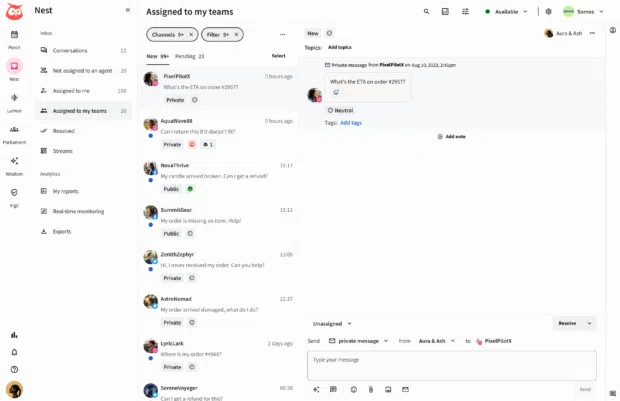
One of the easiest ways to boost your engagement is to bring all of your messages, comments, and tags into one place.
A single inbox helps teams manage all communications at once, without having to jump between platforms or message spread out teams.
This is especially important for direct messages, which often carry the highest-intent questions or concerns.
A centralized inbox helps enterprise teams:
- Track messages from multiple social media platforms
- Sort conversations by urgency
- Assign messages to the right teammate
- Keep a full history of past interactions
With Nest, the customer care app inside Hootsuite Social OS, teams can also view customer profiles, save replies, and use filters to manage high-volume conversations during busy moments.
2. Standardize workflows and tone across teams
Big teams can only stay consistent if everyone follows the same steps. A strong workflow lays out who replies, how they reply, and what happens when an issue needs extra help.
Most enterprises build workflows that follow a simple path:
A message comes in → it gets tagged → it’s assigned → someone replies → anything sensitive gets reviewed → complex issues get escalated.
To make that workflow run smoothly, teams use a few shared rules:
- Tone and voice checks before replies go out
- Clear approval steps for sensitive or high-risk messages
- Response-time goals for each channel
- Tagging rules that sort messages by topic or urgency
- Escalation rules for sending tough issues to customer care
These guardrails keep your brand identity steady, even when hundreds of teammates are replying across different regions and time zones.
3. Build clear tags and routing rules
Tagging makes it easy to sort conversations by topic, priority, or customer need. Routing rules help teams send each message to the right place.
Tags can include:
- Product questions
- Support issues
- Sales opportunities
- Influencer outreach
- Brand mentions
Routing turns these tags into action. For example, sales leads can go to a sales channel, while complaints go to customer care.
4. Use automation to support, not replace, human replies
Automation helps teams stay organized, but human replies build real trust. The goal is to use automation to sort, filter, and prioritize, not to remove the human element.
Automation can help teams:
- Flag urgent keywords
- Sort messages by topic
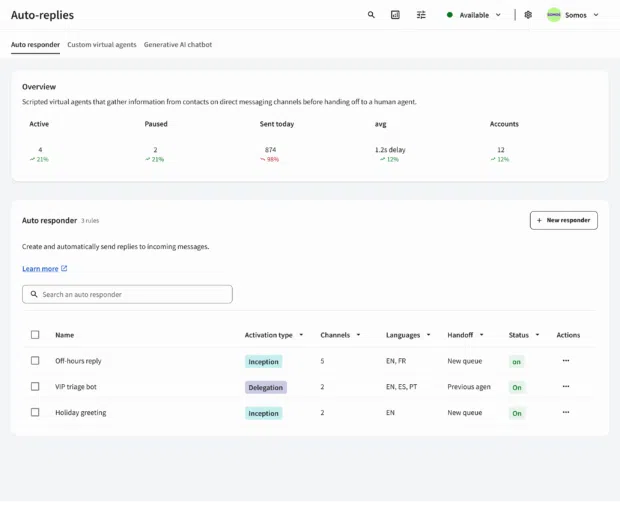
- Send auto-replies for simple questions
- Surface suggested replies for faster responses
Inside Nest, AI-assisted responses help agents reply faster while keeping a person in control of anything that needs care or empathy. This saves time and helps large brands keep up with high message volume without losing quality.
5. Connect engagement data to analytics
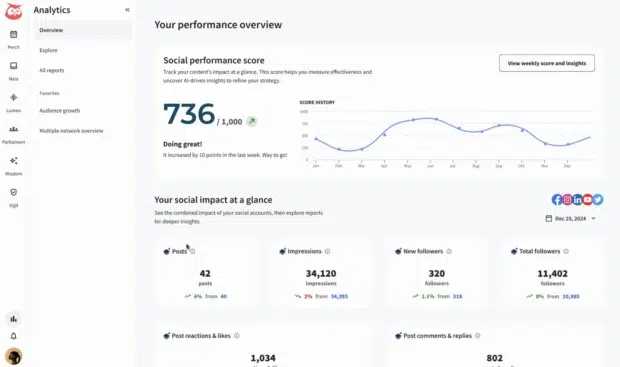
Analytics show teams what customers need and how well the brand is doing. When you measure your engagement, you can improve your replies, fix slow spots, and plan better for busy times. This turns everyday conversations into valuable insights your team can actually act on.
Most enterprise teams track:
- How fast they reply
- How quickly issues get solved
- Which posts get the most engagement
- Changes in customer sentiment
- Common customer pain points
Hootsuite Analytics (and, for deeper reporting, Advanced Analytics) helps leaders see how strong engagement builds loyalty and protects brand health. Lumen, the insights and listening app inside Hootsuite Social OS, adds sentiment and social listening data so you can see the story behind the numbers.
With this kind of data-driven view, teams can improve faster and avoid guessing what customers want.
What are the best strategies to increase customer engagement on social media?
Building strong customer engagement doesn’t happen by accident. Enterprise teams need clear systems, good content habits, and a steady connection to the people they want to reach.
I asked Amanda Vance, Senior Content Strategist for Intuit Mailchimp, for the tactics that make the biggest difference. Here’s what she said, plus a few strategies that help enterprise teams scale engagement without losing quality.
1. Make content relevant, useful, and worth someone’s time
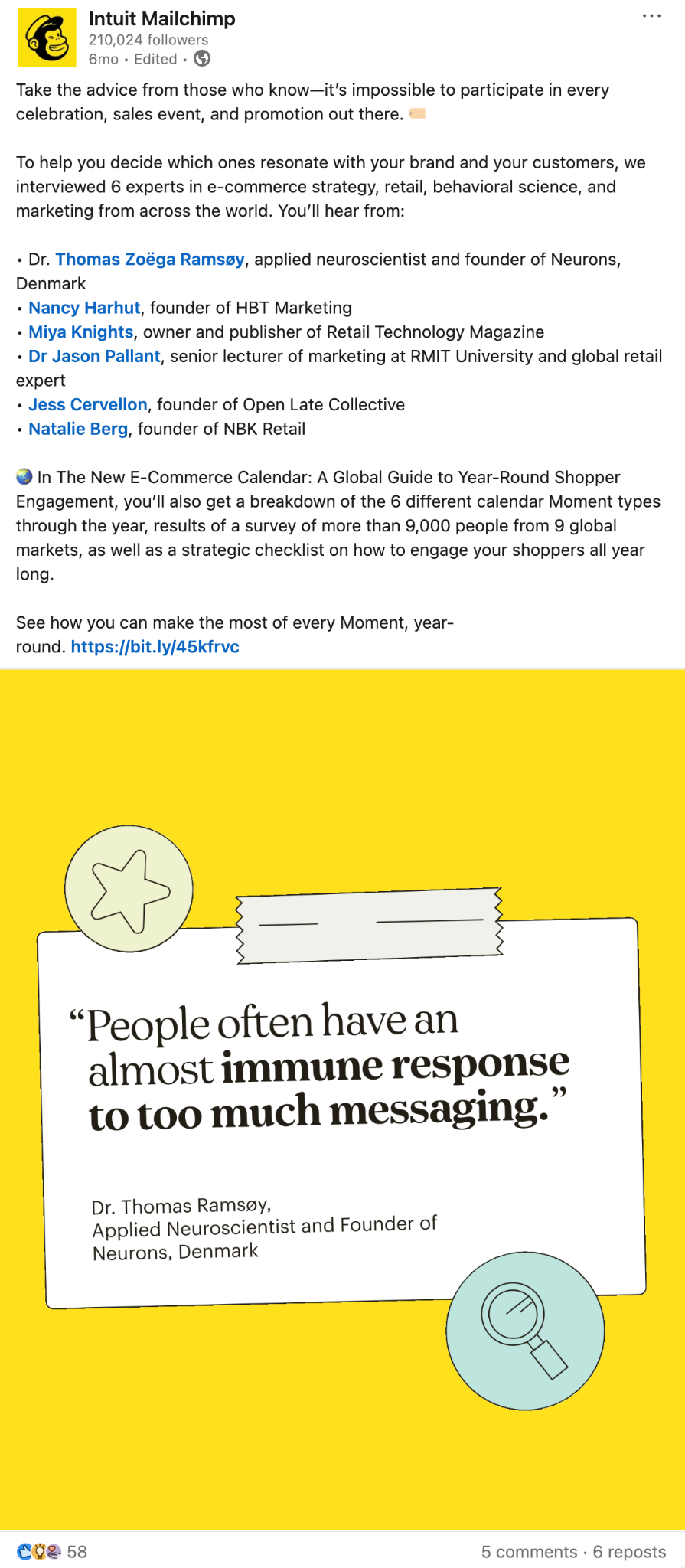
Customers engage when social media content helps them, entertains them, or speaks to something they care about. Vance says brands often overlook how big that bar really is.
As she explained, “Authenticity will always be critical, but there are two other boxes to tick that will make your target audience stick around: relevancy and value adds.”
She also reminds teams to treat every post as an opportunity cost: “Why should someone stop to look at your content in feed? And why would they want to share it with an online connection? Time is the scarcest resource, and every post needs to give people a reason to spend theirs on you.”
Source: LinkedIn
2. Join the conversations your audience is already having
Instead of waiting for engagement to come to you, go where your potential customers are talking.
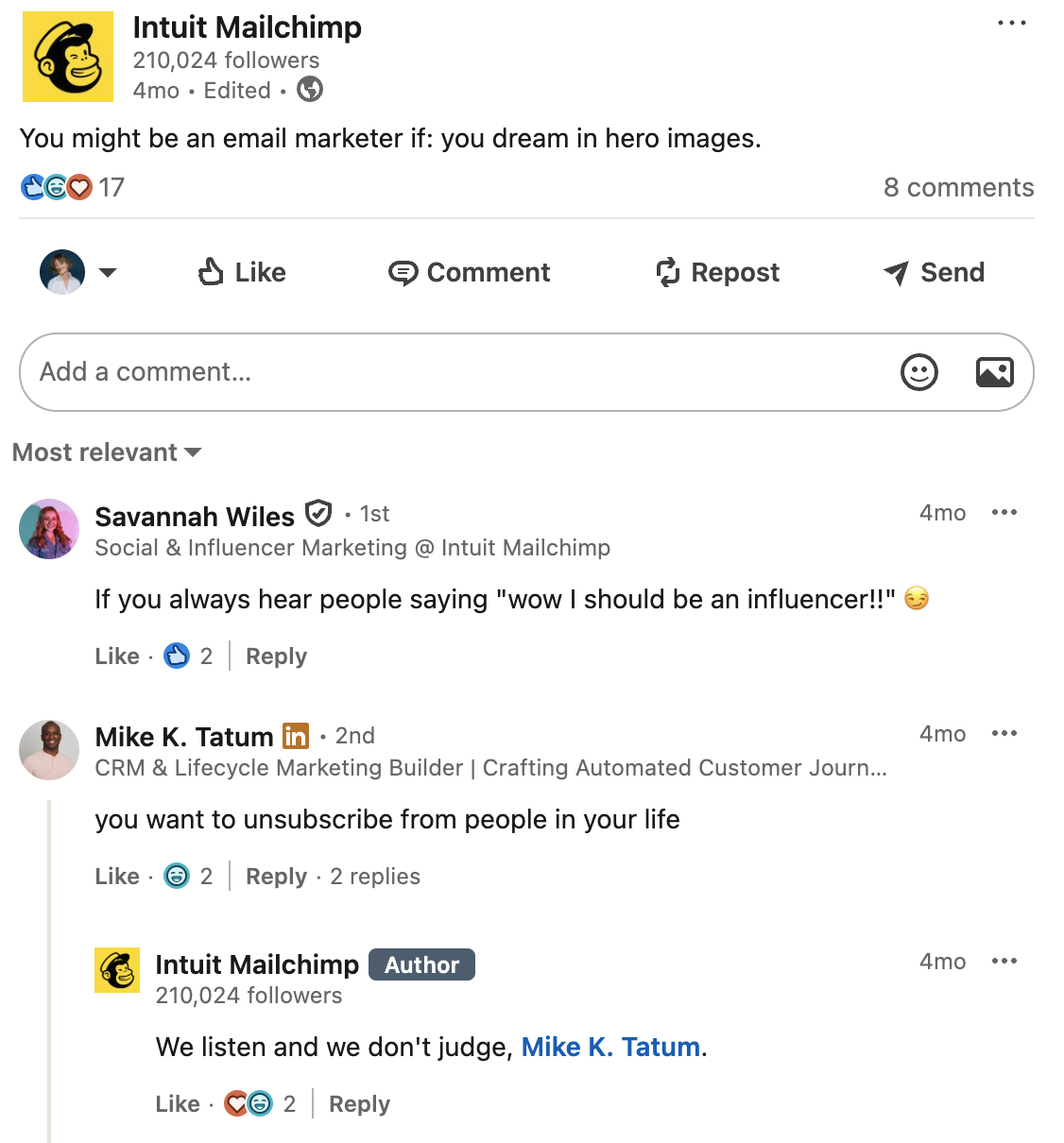
Vance calls outbound engagement “highly underrated.” She says brands should spend more time stepping into relevant comment sections and online communities, not just posting on their own accounts.
“Truly go where your targets are,” she says. “Comment sections, even subreddits of relevant subject matter, and join the conversation. When you’ve earned trust, you’ll then be in a better position to start your own.”
Source: LinkedIn
3. Look closely at audience behavior, not just surface-level metrics
Most enterprise teams track likes and impressions, but Vance says real engagement grows when you understand why people interact, not just how often. That means studying the patterns behind your best conversations: what people ask for, what they respond to, and what makes them stop scrolling.
She notes that broad targeting isn’t enough. Brands have to learn how customers actually behave. What problems do they talk about? What formats do they respond to? What moments earn the most comments?
Relevancy comes from this kind of social listening. When you know what your audience needs, and how they naturally talk about those needs, you can shape content that feels personal instead of generic. That’s what keeps people coming back to comment, share, and take action.
4. Build community through interactive and user-generated content
Community is one of the strongest engagement drivers for enterprise brands, because people trust other customers more than they trust ads. Interactive content and user-generated content (UGC) give your audience a reason to participate, not just scroll.
Polls, Q&As, contests, and challenges invite people to weigh in and share. UGC, such as customer photos, reviews, and stories, turns your audience into advocates and gives you a steady stream of authentic content.
For enterprises, the key is governance. Set clear guidelines for how teams source, approve, and reshare UGC so community engagement stays on-brand and compliant across every region.
5. Engage proactively, not just reactively
Reactive engagement means answering people who come to you. Proactive engagement means seeking out the conversations that matter and joining them first.
That includes monitoring brand mentions, stepping into relevant discussions, and reaching out to loyal customers before they need help. This is where social listening becomes a growth tool, not just a monitoring one.
With Lumen, enterprise teams can track mentions and sentiment across platforms, then step into the right conversations at the right moment. Proactive outreach is a genuine enterprise differentiator, because it shows customers you’re paying attention even when they haven’t tagged you.
What engagement strategies work best on each social media platform?
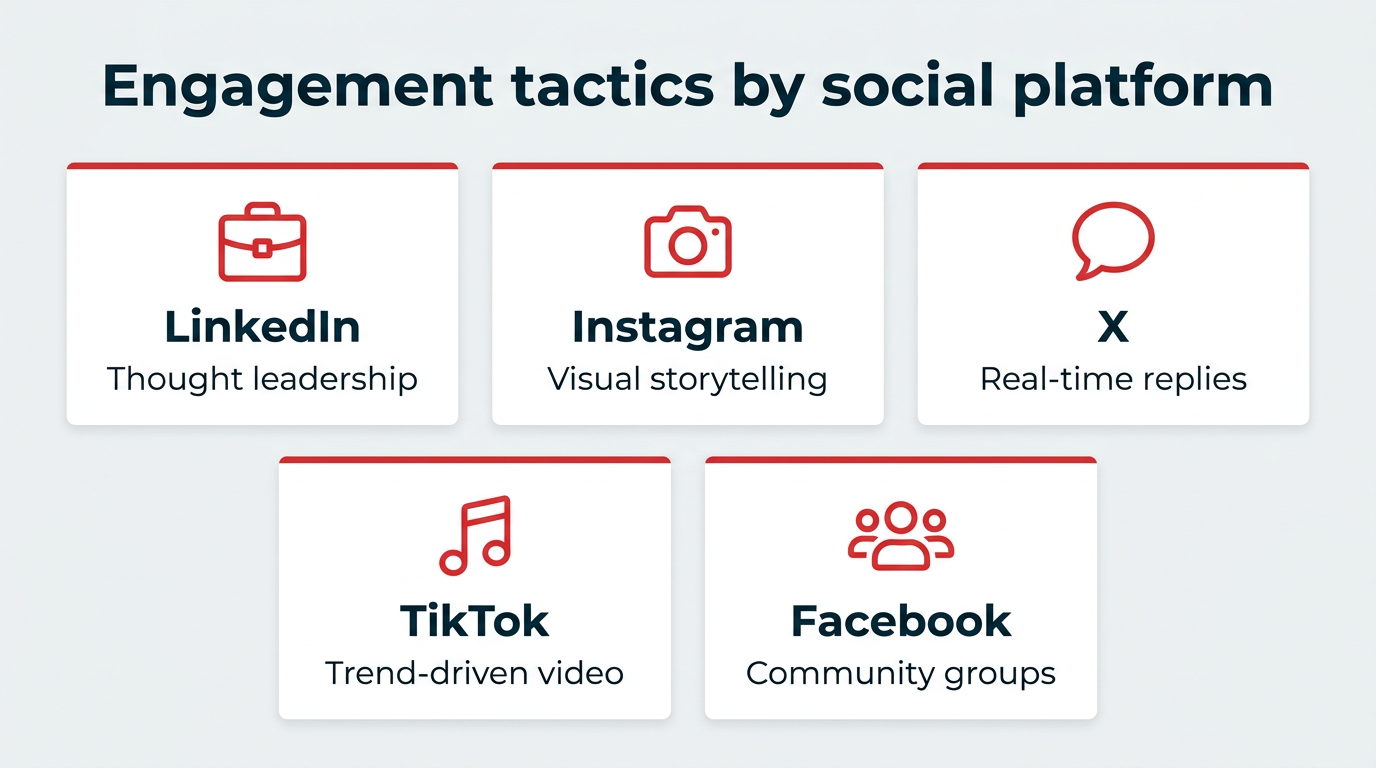
Engagement isn’t one-size-fits-all. Pew Research shows 80% of adults 18–29 use Instagram compared to just 19% of those 65 and older. Each platform rewards a different tone, format, and pace, so enterprise teams get the best results when they adapt their approach channel by channel.
Here’s how engagement tends to work best across the major platforms:
- LinkedIn: Lead with thought leadership and industry insight. B2B audiences engage with expert commentary, employee voices, and conversations in the comments.
- Instagram: Prioritize visual storytelling through Reels, Stories, and carousels. Use interactive stickers, polls, and DMs to keep the conversation going.
- X: This is a real-time channel built for quick replies and customer care. Speed and personality matter most here.
- TikTok: Lean into authentic, trend-driven content. Respond to comments with video and join relevant trends rather than polishing every post.
- Facebook: Use Groups and community features to build ongoing relationships, and treat it as a strong channel for customer support.
Match your engagement style to the platform, and you’ll meet customers in the way they already expect to be met.
How to create a social media customer engagement plan
A social media customer engagement plan is a documented process for how your teams respond, engage, and measure results across platforms. It turns reactive replies into a repeatable customer engagement strategy.
At a glance, the plan follows six steps: audit current engagement, set goals, define roles and workflows, choose platforms and tactics, build a response framework, and set a measurement cadence.
- Audit current engagement: Review how you’re engaging today, where response times lag, and which channels drive the most conversation.
- Set goals tied to business outcomes: Connect engagement to results like retention, satisfaction, or conversions, not just likes.
- Define roles and workflows: Decide who owns which conversations, how messages get tagged and routed, and when to escalate.
- Choose platforms and tactics: Focus on the channels where your customers actually are, and pick tactics that fit each one.
- Build a response framework: Set response-time targets, tone guidelines, and saved replies so quality stays consistent at scale.
- Set a measurement cadence: Decide how often to review your metrics and who acts on them.
Once your plan is documented, it becomes far easier to align it with your wider content strategy and keep every region working from the same playbook.
How to measure social media customer engagement success
Measuring social media customer engagement means tracking how your interactions support real business outcomes, not just likes or comments.
Strong engagement should show up in faster replies, happier customers, and long-term loyalty. Enterprise teams measure success by combining customer engagement metrics with customer experience results.
1. Move from engagement rate to engagement value
Engagement value measures how helpful your interactions are, not just how many you get. You score each interaction based on what it achieves, then calculate an average.
Here’s what that looks like in practice:
Step 1: Assign points to each type of interaction
- Fast response: +1
- Issue solved: +2
- Positive sentiment shift: +2
- Follow-up action (review, referral, renewal, or purchase): +3
- Negative or unresolved interaction: –2
Step 2: Score your interactions for the week
Let’s say your team handled 10 customer interactions:
- 6 fast responses → 6 × 1 = 6 points
- 4 issues solved → 4 × 2 = 8 points
- 2 sentiment shifts → 2 × 2 = 4 points
- 1 follow-up action → 1 × 3 = 3 points
- 1 negative interaction → 1 × –2 = –2 points
Total points: 6 + 8 + 4 + 3 – 2 = 19
Step 3: Calculate engagement value
Divide total points by the number of interactions:
19 points ÷ 10 interactions = 1.9 engagement value
A rising score shows you’re having more helpful, meaningful interactions. A falling score signals that customers may be waiting too long, leaving unhappy, or not getting the support they need.
2. Standardize global KPIs for consistency
Global brands need one shared set of KPIs so every team measures engagement the same way. This keeps data clear and helps leaders compare performance across regions, languages, and social media platforms.
| Metric | Definition | Why it matters |
|---|---|---|
| Average response time | How long it takes to first reply to a customer | Speed shapes satisfaction and often drives loyalty |
| Average resolution time | How long it takes to fully resolve an issue | Reflects how efficiently your team solves problems |
| CSAT from social | Customer satisfaction score from social interactions | Shows how customers feel after engaging with you |
| Sentiment trend | Change in positive vs. negative mentions over time | Signals brand health and emerging issues |
| Interaction volume | Number of conversations each team handles | Helps with staffing and workload planning |
| Engagement rate | Interactions relative to reach or followers | Measures how compelling your content is |
Once your KPIs are set, the real work begins. Share them across teams, build dashboards everyone can access, and review the numbers on a regular schedule.
Look for patterns: slow replies in one region, rising sentiment in another, or spikes in message volume tied to product launches or busy seasons.
When you measure the same way everywhere, it becomes easier to give teams the training they need to keep engagement strong at scale.
Pro tip: Shared KPIs also give every region the same benchmark, so teams stay aligned on what good engagement looks like.
3. Link engagement to customer journey outcomes
Engagement matters most when it improves the customer journey. This means tracking whether social interactions lead to support resolutions, new customers, repeat purchases, or higher customer loyalty.
Enterprise teams often look for:
- Reduced customer churn after strong social support
- More positive reviews or user-generated content
- Higher conversion on landing pages after social conversations
- Better brand awareness and brand community growth
- Fewer complaints because customers get help earlier
Connecting these dots helps prove the business value of your engagement strategy.
4. Use analytics tools to track trends over time
Analytics tools help teams see patterns across thousands of customer interactions. This makes it easier to plan staffing, spot product issues, and improve customer experience.
With Hootsuite Analytics and Lumen for sentiment and listening, enterprise teams can:
- Monitor sentiment and brand awareness
- Measure workload across customer support teams
- Track customer engagement across social media channels
- Compare performance by region or team
- View real-time data inside a single dashboard
How does AI support social media customer engagement in 2026?
AI supports social media customer engagement by helping teams handle more conversations without sacrificing quality. In 2026, that means AI takes on the repetitive work so people can focus on the interactions that need empathy and judgment.
Common AI use cases for engagement include:
- Sentiment analysis: Spot how customers feel at scale and flag conversations that need attention.
- AI-assisted responses: Suggest reply drafts so agents move faster while staying on-brand.
- Predictive routing: Send each message to the right team automatically based on topic and urgency.
- Front-line chatbots: Handle simple, high-volume questions so people can focus on complex issues.
- Social listening at scale: Surface trends and emerging issues across millions of conversations.
The goal isn’t to remove people from the conversation. Forrester predicts one-third of brands will erode trust through premature AI self-service in 2026. It’s governed AI that works inside your existing rules and workflows. Hootsuite Social OS brings this together with Wisdom for AI orchestration, Nest for AI-assisted customer care, and Lumen for contextual intelligence, so your teams get AI-powered insights without losing the human touch.
What tools and technologies support customer engagement at scale?
Enterprises need tools that help teams stay organized, reply fast, and keep every social media conversation in one place. A strong setup makes customer engagement tools easier to manage across many social media platforms and large teams.
Most enterprise teams look for tools that help with:
- Central dashboards that gather messages, comments, mentions, and tags from all social networks in one place.
- Routing and assignment systems that let a team member claim, respond to, or escalate a conversation, so nothing gets lost.
- Tagging and categorization tools that sort messages by type: question, support request, complaint, praise, sales inquiry, etc.
- Analytics and reporting tools that show how fast the team responds, how many conversations they handle, what kinds of issues come up, and how customers feel over time.
- Automation features, like keyword filters, auto-acknowledgement replies, or alerting, to manage heavy volume without losing speed or tone.
- CRM integrations so that social interactions can feed directly into your customer-management system when follow-up, leads, or long-term tracking are needed.
- Many enterprise brands also use UGC tools to source customer photos, stories, and reviews that strengthen engagement and build trust.
These tools also support your wider marketing efforts, since the way you engage often shapes what you post next.
That said, you don’t need a pile of separate tools. For many enterprises, one connected system covers it all.
How Hootsuite Social OS helps enterprises improve customer engagement
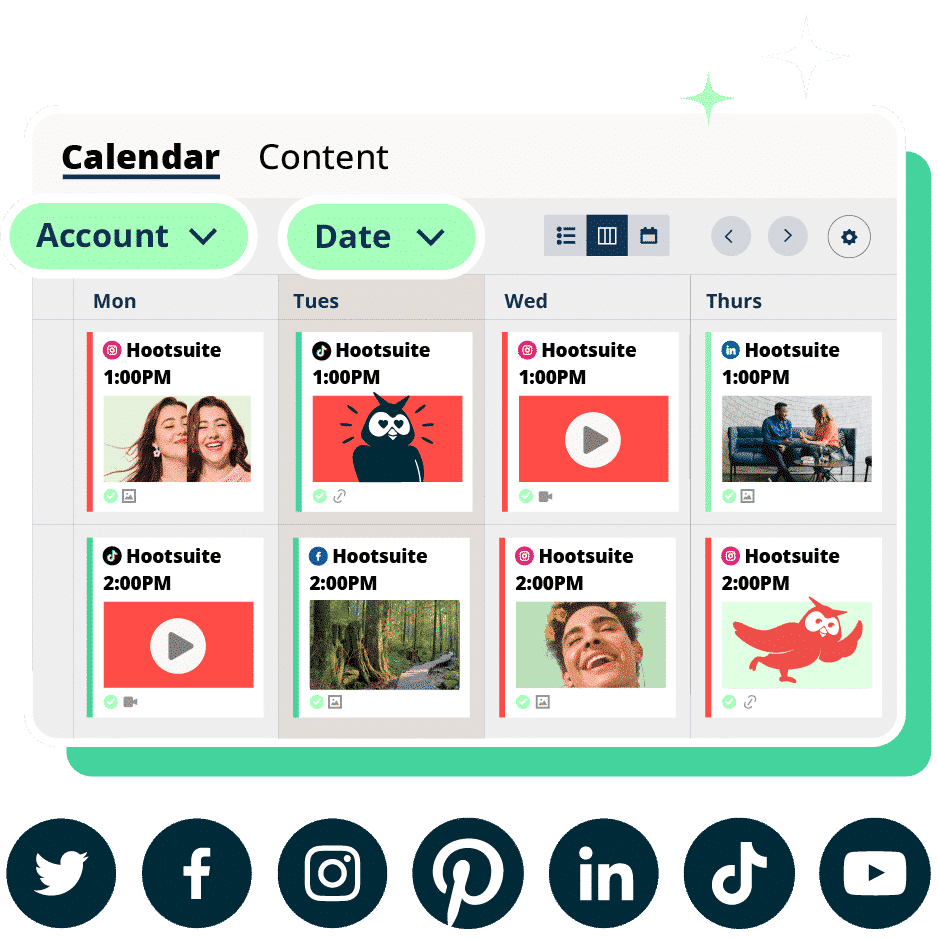
Hootsuite Social OS gives enterprise teams a social operating system to track customer engagement across every channel, with connected apps that work as one system rather than a pile of separate tools.
With Hootsuite Social OS, enterprises can:
- Use Nest as one shared inbox for all social media messages and comments.
- Assign conversations to the right teammate for customer support, sales, or community.
- Track customer feedback, common questions, and trends through tags and labels.
- Manage high-volume conversations with automation and real-time alerts.
- Route important customer interactions into a CRM for follow-up.
- Measure response time, sentiment, brand awareness, and customer experience trends through Hootsuite Analytics and Lumen.
- Use Wisdom for AI orchestration and Perch for content and publishing, all within governed workflows.
- Keep tone and workflows consistent across teams, regions, and time zones.
Case study: How U-Haul strengthens customer engagement with Hootsuite
U-Haul manages a huge volume of customer conversations each day, and before Hootsuite, it was hard for its teams to keep up.
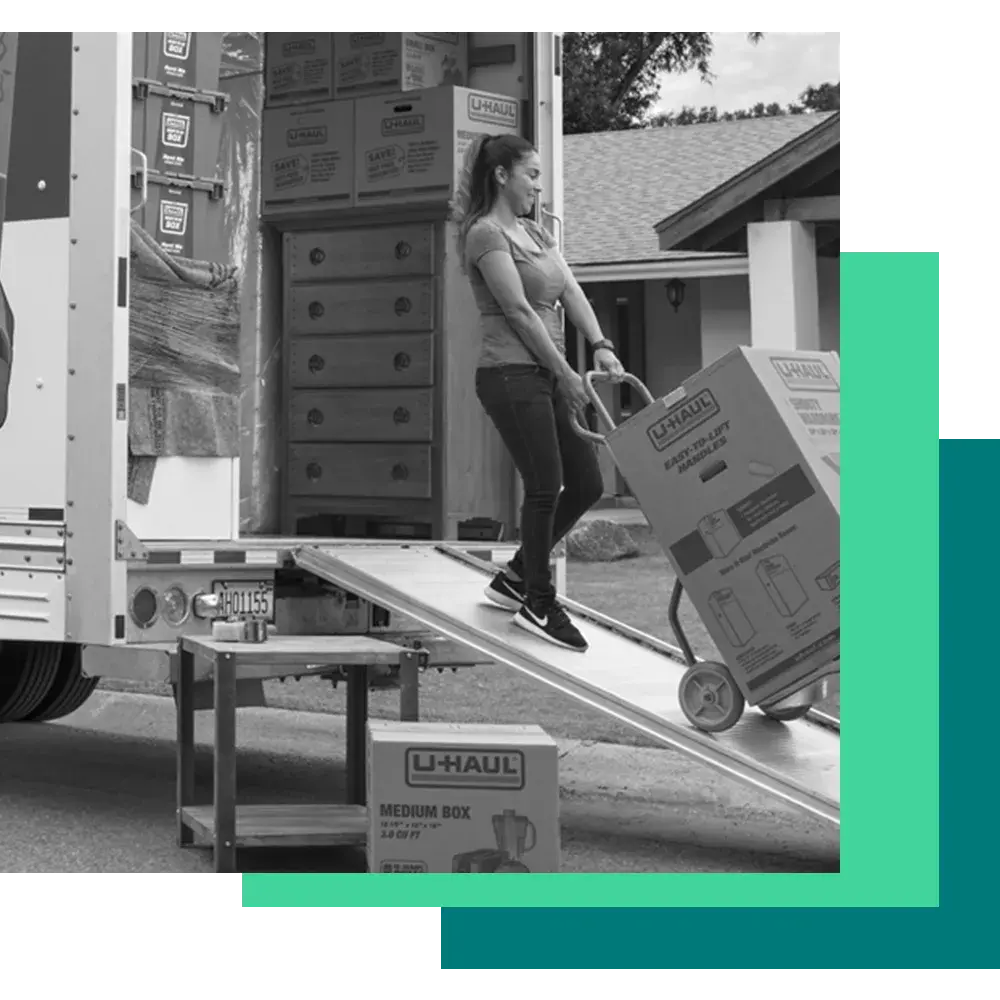
By centralizing all comments, DMs, and mentions in one inbox, they gave their agents a simple way to spot messages, tag them, and reply fast with the full interaction history in view.
This clarity made a real difference. First response time dropped to under 10 minutes, and full replies now land in under 30. Customers get answers sooner, and agents stay focused instead of juggling platforms.
The team also uses Hootsuite to engage proactively. When they see conversations that need attention or moments where sentiment dips, they step in quickly and build positive interactions that reinforce brand loyalty.
It’s a real example of what strong engagement systems can do: faster replies, clearer workflows, and a more human connection at enterprise scale.
FAQ: Social media customer engagement
What is social media customer engagement?
How can large organizations measure engagement effectively?
What tools help enterprises manage engagement?
How do AI and automation affect engagement quality?
How can Hootsuite help scale social engagement globally?
What is the 5-5-5 rule on social media?
What are the 5 C’s of customer engagement?
What is the 5-3-2 rule on social media?
What is the difference between customer engagement and customer experience?
How often should enterprise teams respond to social media messages?
Save time managing your social media marketing strategy with Hootsuite. Publish and schedule posts, find relevant conversions, measure results, and more â all from one dashboard. Try it free today.
The post Social media customer engagement: 2026 enterprise guide appeared first on Social Media Marketing & Management Dashboard.
br https://ift.tt/qRHh2M4
https://ift.tt/E0D9izq
Comments
Post a Comment